
A few years ago, a talent release form was a simple document. It gave permission to film someone and use the footage for an agreed purpose.
Now, with a few minutes of good footage and audio, AI tools can recreate a person's face and voice saying things they never said.
That changes what consent needs to cover.
A note before we start: this is practical guidance from a production perspective, not legal advice. Rules differ across markets, and your legal team should review any policy or contract.
What has changed
Three things have shifted at once.
The technology is accessible. Voice cloning, face replacement and digital avatars are no longer specialist tools. They are features in mainstream software.
Footage lasts. Material filmed today can be reused for years, in ways nobody imagined at the time of the shoot.
Audiences and regulators are paying attention. Several jurisdictions in the region and beyond have introduced or are developing rules on deepfakes, synthetic media and the use of personal data. Expectations are moving faster than most contracts.
For brands in banking, insurance, healthcare and other regulated industries, the reputational risk is significant. A misused likeness is the kind of story that spreads fast.
What people should now sign off on
When you film employees, executives or talent, it is worth making these points explicit:
• Purpose and duration. Where will the footage be used, and for how long?
• AI use. May the footage be used to train or prompt AI tools? May the person's voice or face be digitally altered, extended or recreated? Under what conditions?
• Approval. Will the person see and approve any AI-altered content before it is published?
• Departure. What happens to their likeness if they leave the company?
• Withdrawal. Can they withdraw consent for future use, and how?
The principle is simple. People should know exactly how their image and voice might be used, and nothing should surprise them later.
Disclosure: when audiences need to know
Not every use of AI needs a label. Colour correction, noise reduction and subtitles generated with AI tools are production techniques, much like editing software.
The situation changes when AI creates or alters a person, a place or an event that viewers would assume is real. A synthetic spokesperson, a cloned voice or a scene that never happened should generally be disclosed.
Disclosure doesn't need to be clumsy. A short, clear line in the caption or credits is usually enough. Done well, it builds trust rather than undermining it.
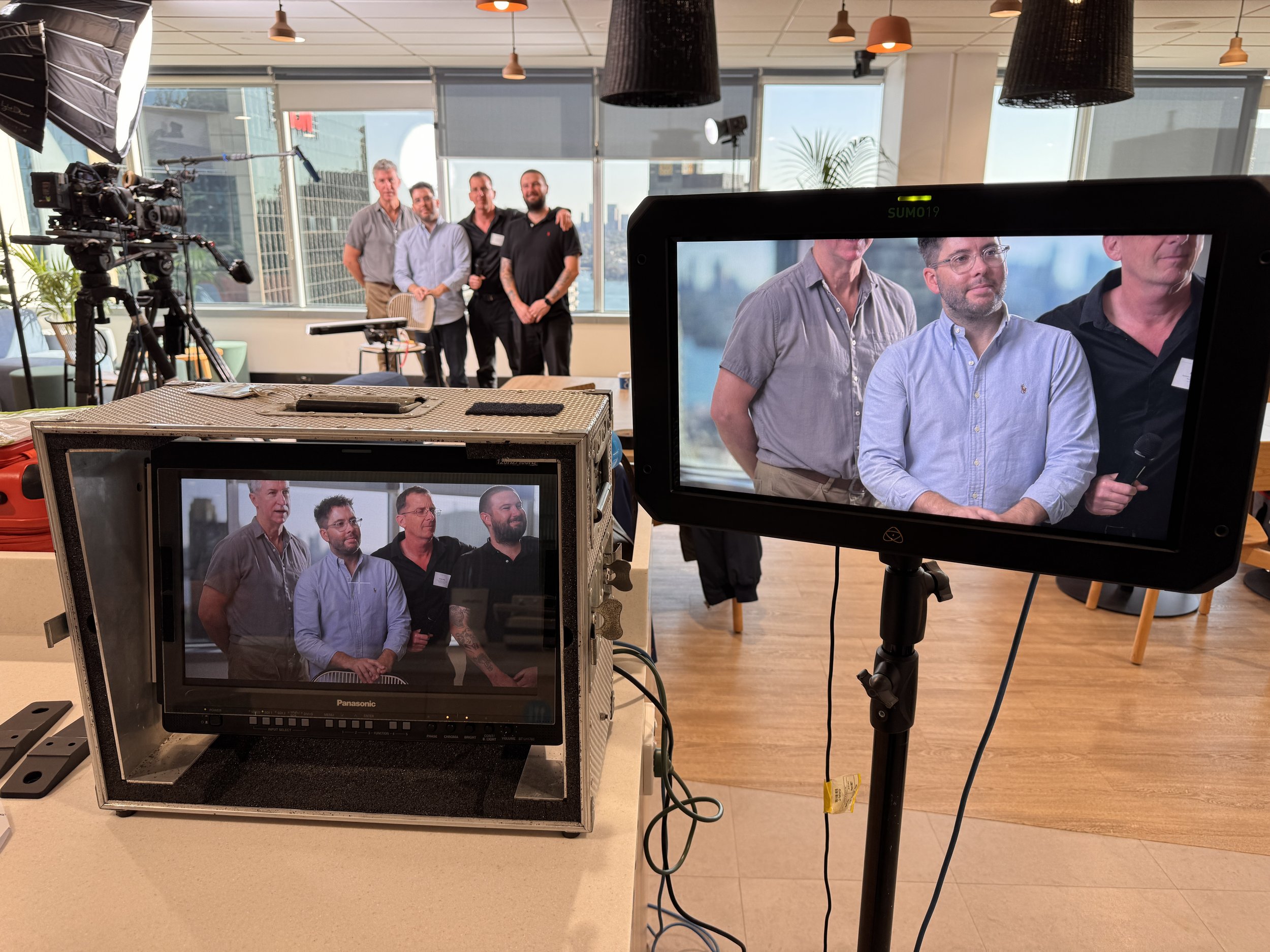
This is not an AI generated image.
Don't forget existing footage
Many organisations hold years of archive footage of executives and staff, filmed under release forms written before generative AI existed. Before using any of that material with AI tools, check what the original consent covered. If it's unclear, ask the people involved. It's a small step that avoids a large problem.
A simple internal policy for January
If your organisation doesn't yet have a policy on AI and likeness, a one-page document covering these points is a good start:
1. Which AI uses are allowed without special approval
2. Which uses need legal or communications sign-off
3. What consent is required before any AI use of a real person's likeness
4. When and how AI use is disclosed to audiences
5. Who owns the policy and how often it is reviewed
Share it with your agencies and production partners, too. They should be working to the same rules.
Questions to ask your production partner
Your agencies and production companies handle a great deal of footage of your people. It's reasonable to ask how they manage it.
• Which AI tools do you use in production, and for what?
• Is any of our footage or audio uploaded to third-party AI services? Which ones, and under what terms?
• How is raw footage stored, and who can access it?
• How long do you keep it, and how is it deleted?
• Do your talent release forms cover AI use, and can we review them?
• Will you tell us before any AI is applied to a real person's face or voice?
A good partner will answer these questions clearly and without hesitation. If the answers are vague, that tells you something too.
Good practice protects everyone
Clear consent protects the people on screen. It protects the brand from reputational damage. And it protects the work, because a film built on trust is easier to defend and longer-lasting.
Set the rules before the shoot, not after the headline.
Working in a regulated industry? PPP has some of the latest AI usage guidelines, a practical starting point for your next production. Feel free to get in touch.
