
Clients often ask what the hardest part of a shoot is.
They expect me to say the lighting, or the weather, or getting a nervous executive to relax in front of the camera.
The honest answer is that by the time we arrive on set, the hard part should already be done.
The calm shoot day is built the week before.
Problems in the edit start in pre-production
When a client watches a first cut and something feels wrong, it is rarely an editing problem. The message is muddy because the script was. The location looks generic because nobody visited it. The interview feels stiff because the speaker wasn't briefed. The schedule ran over, so the final scenes were rushed.
All of those were decided in pre-production. The edit just reveals them.
That's why we spend so much time on the weeks before the camera rolls. It is the cheapest place to fix anything.
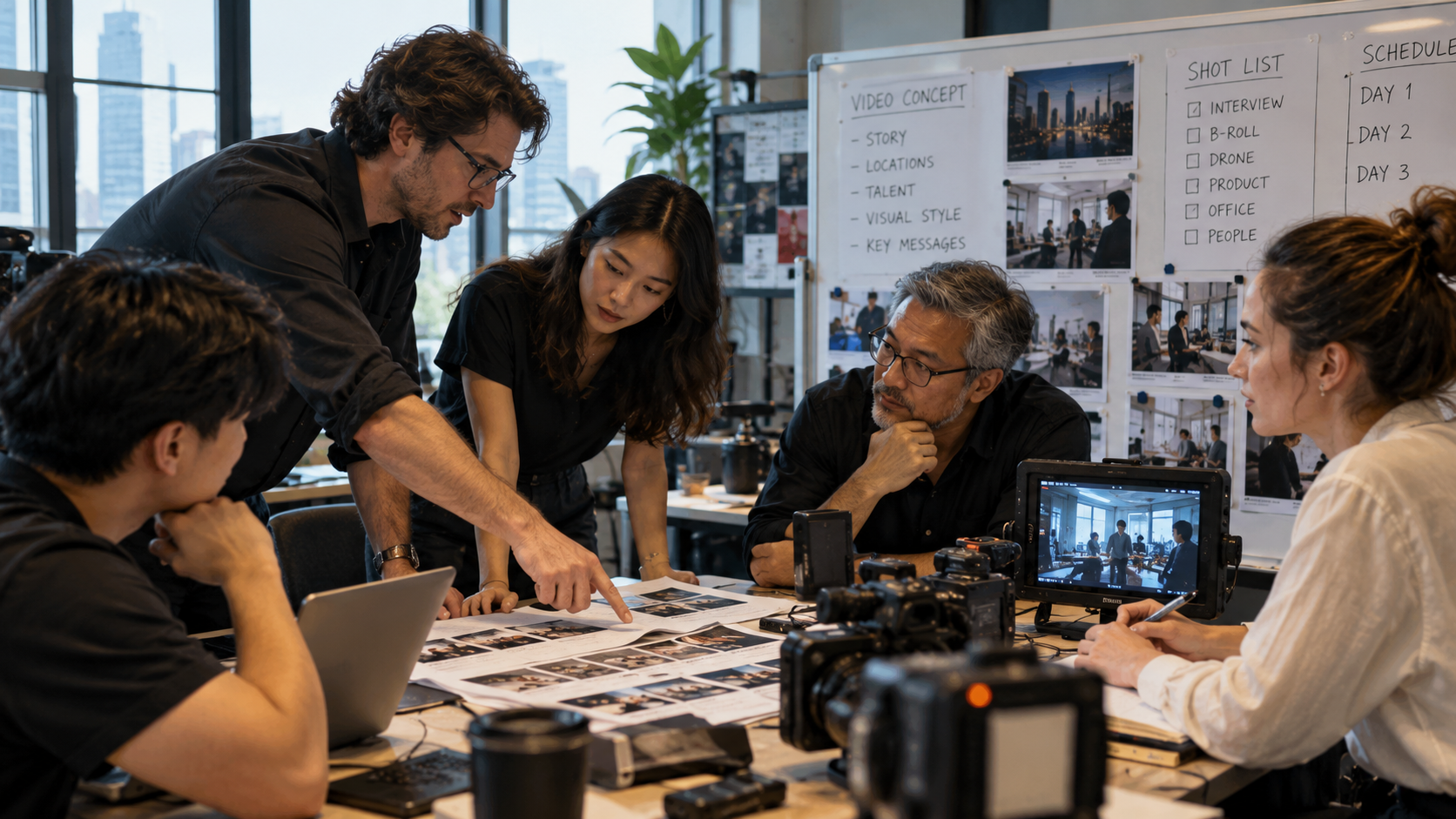
The five decisions that shape the final film
Every project is different, but five decisions shape almost all of them.
1. The message. What is the one thing this film must say, and to whom? If the team can't agree on a single sentence, the film won't either. We push hard on this, because everything else follows from it.
2. The location. A location carries meaning. A gleaming lobby says something different from a factory floor or a shophouse in Hanoi's Old Quarter. It also carries practical realities: noise, light, permits, power, access, and what time the building's security goes home.
3. The casting. Whether you are casting actors or real employees, the people on screen decide whether the audience believes you. Real staff often perform better than expected when they are well prepared. Unprepared, even confident leaders freeze.
4. The schedule. A realistic schedule protects quality. An optimistic one costs it. We plan the day around light, talent availability and the shots that matter most, so the important material is captured while everyone is still fresh.
5. The approvals. Who signs off on the script, the casting, the location and the final cut? In larger organisations, approvals take longer than production. Mapping them early prevents the most common delay of all: a senior stakeholder seeing the film for the first time at the end.
What a producer looks for on a location visit
A recce, or location scout, is one of the most valuable days in any project. Photos from a property manager never tell you everything.
On a visit, a good producer is checking:
• Where the sun is at the time we plan to shoot, and where it will be two hours later
• How loud the space is when the air conditioning, traffic or neighbours kick in
• Where crew can stage equipment without blocking the shot or the business
• Power, parking, lifts, loading access and building rules
• What's in the background that a client might not want on camera
For example – Our 1 hr live programme for Singapore’s EDB took 6 weeks of planning checking, location visits, permit’s and every possible risk assessment including a natural disaster – A link to the BTS from the show - https://youtu.be/g8S6MOnJQtg?si=ZAtrGN46v-rvuP_z
What pre-production should produce
By the end of pre-production, a client should be able to see a clear set of documents. If they don't exist, the shoot is running on hope.
An approved script or treatment. What the film says, and how it will look and feel.
A shot list. Every shot the film needs, grouped by location and set-up so the day runs efficiently.
A schedule and call sheet. Who needs to be where, at what time, with what. Including contact details, directions and a backup plan for weather.
Casting confirmations and releases. Who will appear on camera, with their consent in place.
A location plan. Permissions, access, parking, power and any restrictions from the building or authorities.
An approvals map. Who signs off on each stage, and by when.
These documents aren't paperwork for its own sake. They're how a production team proves it has thought through the day before asking a client to pay for it.
How a tight pre-production week saves money
It can feel counterintuitive to spend more time before the shoot. Surely the money goes on the shoot itself?
In practice, one well-planned shoot day replaces two badly planned ones. A clear shot list cuts hours from the edit. Prepared interviewees need fewer takes. Approved scripts mean fewer reshoots. And knowing exactly what you need lets you capture extra material for social and internal use while the crew is already there.
Pre-production is where you buy that efficiency.
Before your next shoot
If you're commissioning a video, ask your production partner to walk you through their pre-production plan. Who visits the location? When is the script locked? Who approves what, and when?
The answers will tell you a lot about the film you're going to get.
Want a head start? Get in touch and we'll walk through your next project together.
