
At the end of every year, I try to look back at the work and ask a simple question. What did this year teach us that we didn't know at the start?
This year, we worked across eleven markets in Asia-Pacific. Different languages, different crews, different weather, different ways of saying yes when people mean maybe.
Here are some of the lessons the team took away.
Lesson one: the plan is a starting point
Every shoot begins with a schedule. Very few end with it intact.
Weather changes. Locations fall through. A key interviewee is called into a meeting. The skill isn't avoiding these moments. It's having a team calm enough and experienced enough to adapt without losing the film.
Sydney to Brisbane no problem. This happened recently on our Australia project, the client decided that their Sydney office was not good enough they wanted to shoot at their facility in Brisbane, we said “ no problem” then figured it all out within 24 hrs.
Lesson two: local crews know things you don't
We work with local crews and partners in every market. Every year, they remind us how much local knowledge and culture matters.
The fixer who knows which street goes quiet at 2pm. The camera assistant who knows the building manager and the taxi driver that knows the most iconic locations. The producer who can tell, from one sentence, that a client is unhappy.
Tradition must be respected
“In many Asian cities on the first day of filming there must be a blessing for the shoot and the crew to bring good luck. In Vietnam bananas on set are bad luck.”
Lesson three: people relax when you give them time
Some of the best moments in this year's films came from people who had never been on camera before. In almost every case, the difference was time. Time to talk before filming. Time to warm up. Time to forget the camera was there.
“A CEO of a major global investment firm had over thought his answers and just could not get the delivery correct. I advised him to start again and throw the notes away and just have a conversation, it turned out to be such a fascinating “real” interview.”
Lesson four: AI changed the work, not the craft
This was the year AI became part of daily production for us. Research, drafts, transcripts, pre-visualisation and versioning all moved faster.
What didn't change was the craft. Deciding what matters, finding the human story, lighting a face well, cutting a scene so it lands. Those still take experience.
“PPP gives us the scope to try new tools and concepts and AI has given me a whole new creative tool to add value to my work. Caleb Rozario”.
Lesson five: Vietnam keeps surprising us
Our work in Vietnam grew this year, and the market continued to move faster than most people outside it realise. Young audiences, high standards, and a creative energy that's genuinely exciting to work in.
“All creatives love freedom, in Vietnam we have found many creatives are often micro-managed, PPP doesn’t do this and we love to unleash the creative skills of our partner’s”.
Lesson six: the brief is everything
Looking back across the year's projects, the ones that went most smoothly had something in common. Everyone agreed, early, on what the film needed to say and who it was for.
The projects that struggled usually didn't struggle on set. They struggled because the brief was still moving while production was under way. New stakeholders arrived with new opinions. The message grew longer. The film tried to do too many things.
It's a lesson we relearn every year, and one we'll keep pushing with clients in 2027. Time spent agreeing the brief is the best investment in any project.
Feed the team
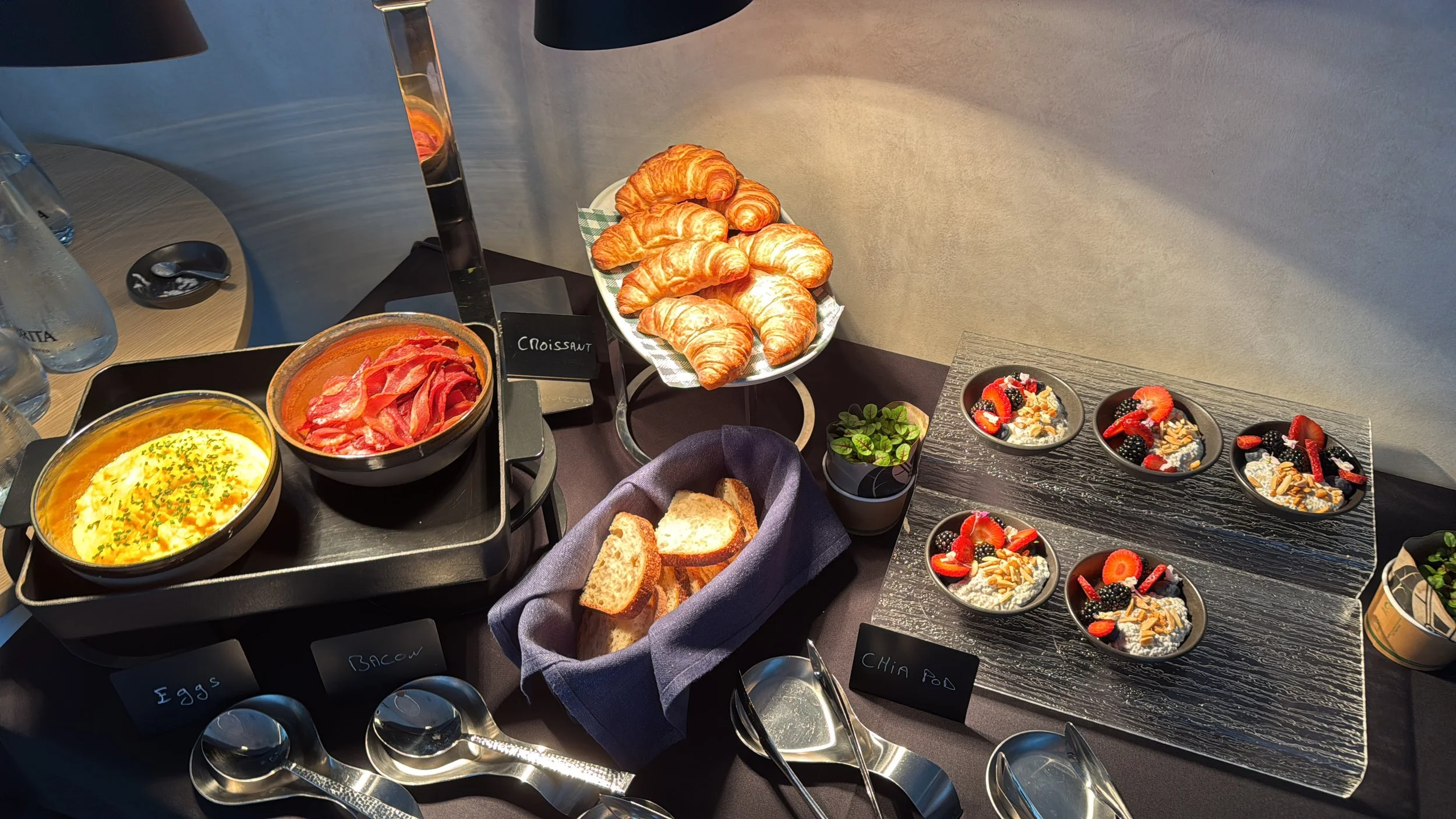
“PPP always gets excellent food for our production partners: Recently our client supplied a 5 star breakfast for the crew, scrambled egg, toast and pastry selection, muesli, fruit and barista coffee”. “A well fed crew is a happy crew”.
Lesson seven: technology moves, people stay
Every year brings new cameras, new software and new platforms. What doesn't change is how much the work depends on people trusting each other, on set and off it. The best days this year were the ones where clients, crews and the people on camera all felt part of the same project. We all worked together focused on achieving the best results and it was achieved.
A thank-you to our crews
Behind every film are people the audience never sees. Camera assistants, gaffers, sound recordists, drivers, fixers, make-up artists, production assistants and editors who stay late to make the deadline. We had shoots in Nigeria, Vietnam, Singapore, Thailand, Sth Korea, Australia, Hong Kong, Brazil, Lebanon. Its our partners that made this year's work possible, and we're grateful to every one of them.
What we're carrying into 2027
A few things are staying with us as we plan next year.
Prepare more than you think you need. Respect local knowledge. Give people time. Use technology to free up attention for the work that matters.
And keep asking what the story really is before deciding how to tell it.
Thank you to everyone we worked with this year: our clients, our crews, our partners across the region and the people who agreed to stand in front of our cameras. The work is only ever as good as the people in it.
Planning your story for 2027? Tell us about it, and we'll help you tell it well.
